When an event runs smoothly, most people assume it just happened that way.
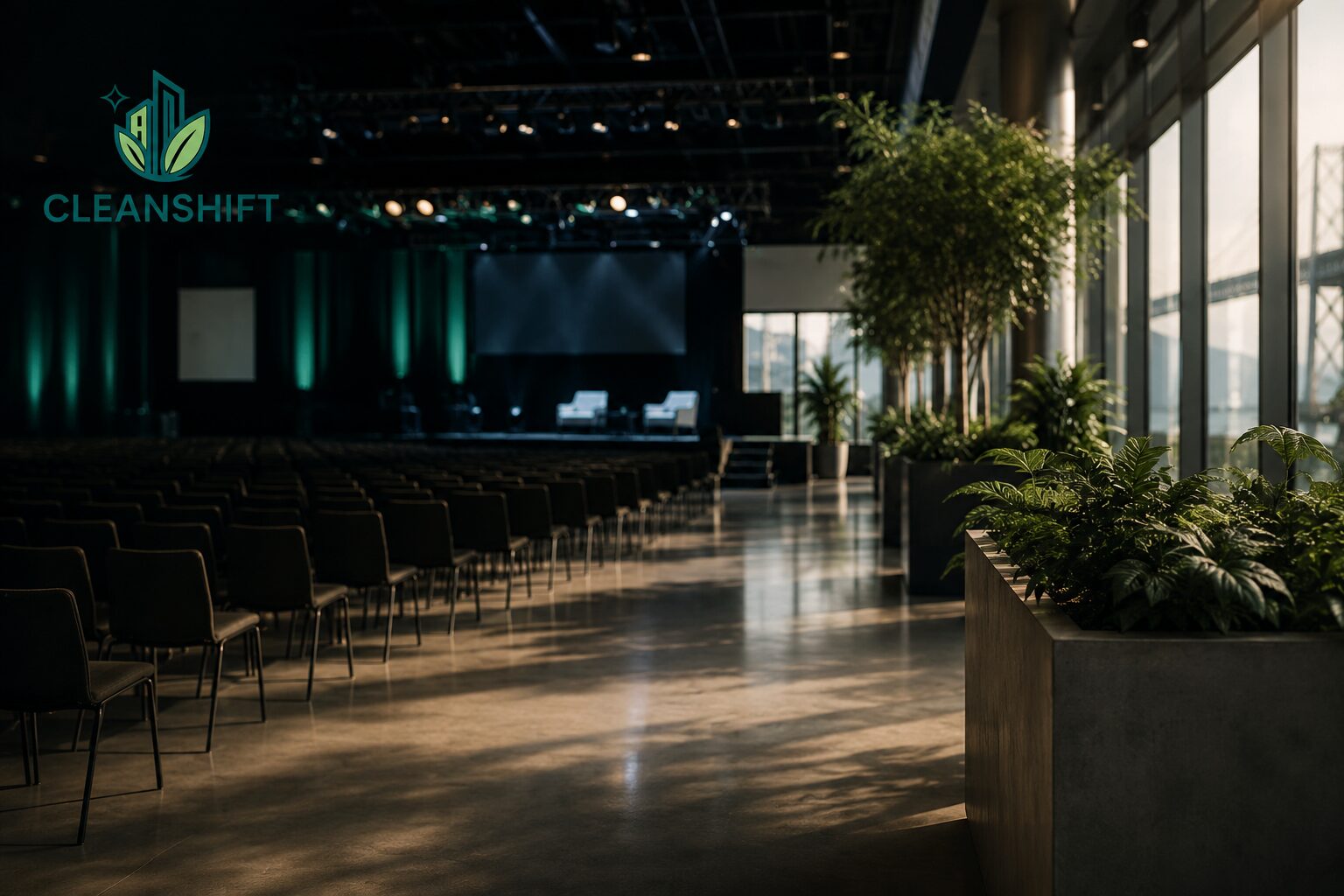
The venue looked great. The restrooms were clean. The floors were clear. Trash never piled up. The space felt ready from the moment guests walked in until the moment they left.
But none of that happens on its own.
Behind every well-run conference, corporate activation, concert, festival, or large-scale gathering is a layer of operational coordination that most attendees never see. And increasingly, that operational layer is what separates a successful event from one that struggles to hold together under pressure.
At CleanShift, we work inside high-traffic event environments across San Francisco, Oakland, Marin County, and the greater Bay Area. What we’ve learned is that event operations is one of the most underestimated and undervalued components of live event infrastructure.
What Event Operations Actually Means
Event operations is not a single task. It’s a framework.
It encompasses everything that keeps a venue functional, safe, and presentable before, during, and after a live event. That includes:
- Pre-event facility preparation and venue readiness
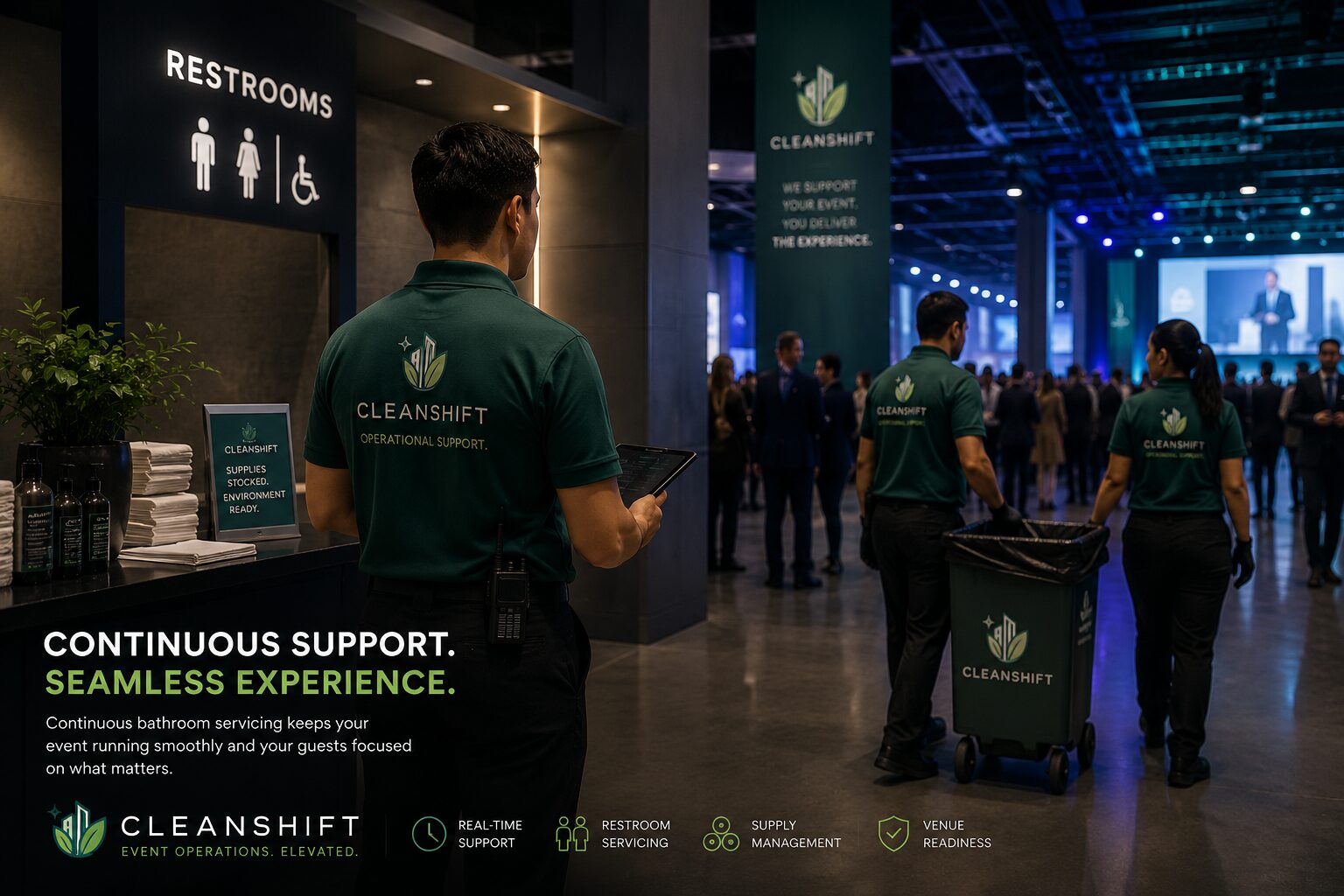
- Porter staffing for continuous support during events
- Restroom servicing and supply management
- Waste coordination and overflow prevention
- High-traffic area maintenance
- Staging area and back-of-house support
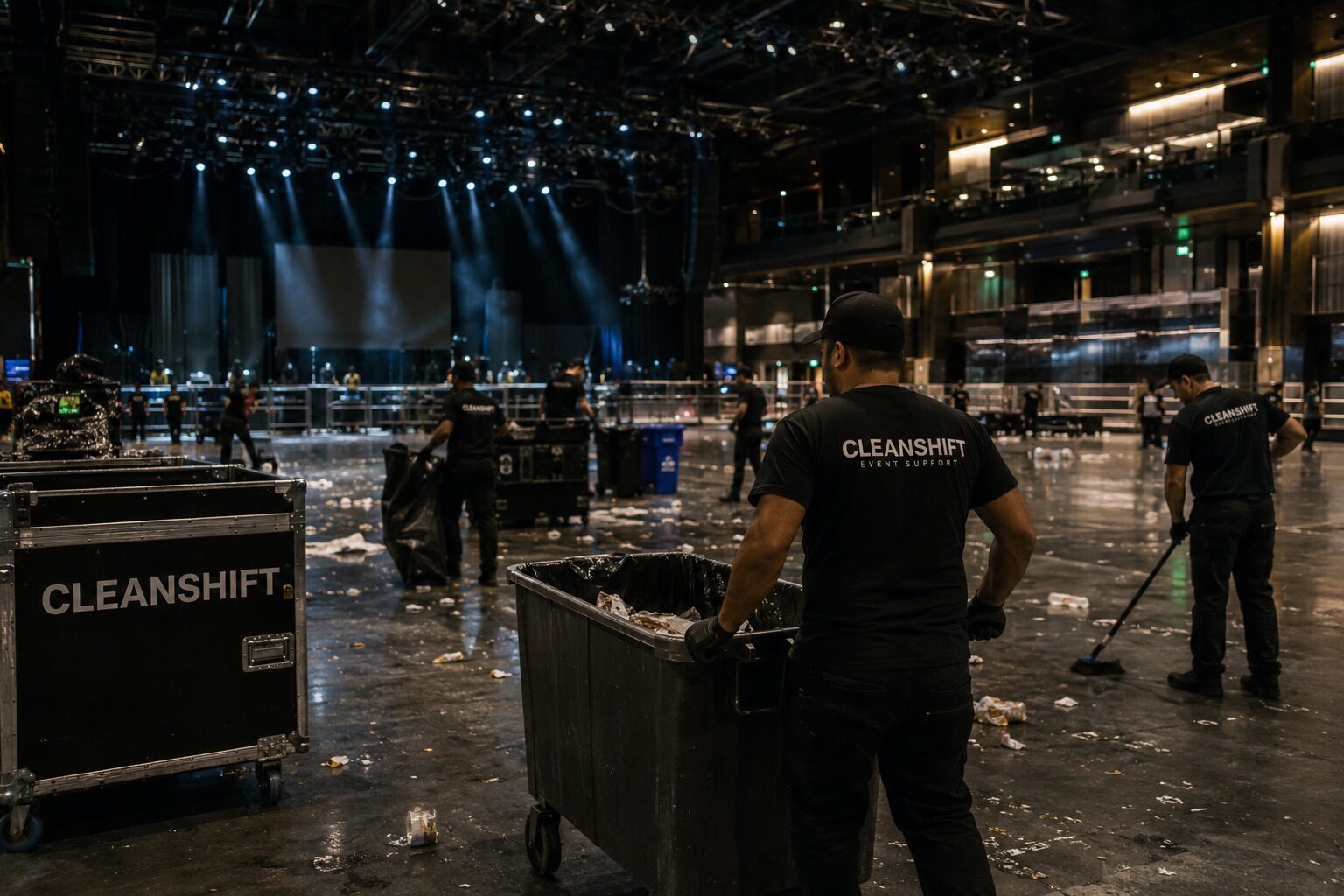
- Post-event cleanup and overnight venue reset
- Real-time communication with production and venue teams
None of these functions operate in isolation. They work together as an integrated system that keeps the entire venue environment running throughout the event lifecycle.
The Gap Between Planning and Execution
Most event planning focuses on the guest-facing experience: programming, catering, production, marketing, ticketing, talent.
Those elements get the attention because they’re visible. They’re what attendees remember.
But underneath every guest-facing experience is an operational foundation that either supports it or undermines it. And when that foundation isn’t solid, the cracks show up fast.
Trash accumulates in high-traffic areas. Restrooms decline. Walkways become cluttered. Loading zones slow down. Vendor areas get backed up. The venue starts feeling chaotic even if the programming is flawless.
The gap between planning and execution is almost always an operations gap. And it’s the reason more venues, agencies, and event organizers across the Bay Area are investing in dedicated operational support teams rather than relying on ad-hoc staffing.
Why Venue Readiness Is an Active Process
Venue readiness is not a one-time setup. It’s a continuous process that runs from the moment doors open until the last guest leaves.
During a four-hour corporate event, a venue’s condition can shift dramatically. A pristine lobby at 6 PM can look entirely different by 9 PM if no one is actively maintaining it. A clean restroom at the start of a concert can become a liability by the second hour if it’s not being serviced.
Venue readiness means having people on the ground, in real time, maintaining the physical environment throughout the entire event. Not just before it starts. Not just after it ends. During.
That’s the operational shift that high-performing venues have already made.
The Role of Porter Teams in Live Events
Porter staffing has become one of the most effective models for maintaining venue readiness during live events.
Rather than assigning facility tasks to general event staff who are already managing other responsibilities, dedicated porter teams focus entirely on the physical environment.
That means:
- Continuous monitoring of restrooms, lobbies, and high-traffic zones
- Proactive waste management before overflow occurs
- Real-time supply restocking
- Floor maintenance and spill response
- Communication with event leads about emerging issues
- Support for vendor breakdown and staging transitions
Porter teams don’t wait for problems. They prevent them. And in high-traffic environments where conditions change by the hour, that proactive approach makes a measurable difference in how the event holds together.
The Economics of Getting It Right
There’s a real cost to getting event operations wrong.
Venues that don’t invest in operational support end up spending more on emergency cleanup, overtime staffing, and damage control. Event organizers who skip operational planning face complaints, negative reviews, and strained venue relationships. Production companies that don’t coordinate with support teams lose time during load-in, load-out, and turnaround windows.
On the other side, venues and organizers who invest in operational support see faster turnarounds, cleaner environments, smoother vendor coordination, and better guest experiences.
The return on operational investment isn’t always visible in a budget line. But it’s visible in every other metric that matters: guest satisfaction, venue condition, turnaround speed, and the ability to run back-to-back events without operational failures.
What’s Changed in the Bay Area Event Landscape
Over the last several years, the Bay Area event landscape has evolved significantly.
Events are larger. Turnaround windows are tighter. Venues are booking more frequently. Guest expectations are higher. And the margin for operational error has shrunk.
In San Francisco alone, venues regularly move from a corporate conference one evening to a product launch the next morning, or from a concert on Friday night to a private event Saturday afternoon. Oakland’s event scene has expanded dramatically. Marin County is hosting more large-scale activations and productions than ever before.
All of this means that the demand for reliable, experienced operational support teams has grown alongside the events themselves.
The venues and organizers who recognized this early are the ones running the smoothest operations today.
Operations as Infrastructure
The most important shift in how the event industry thinks about operations is the move from treating it as a task to treating it as infrastructure.
Tasks get assigned. Infrastructure gets built.
When event operations is treated as infrastructure, it becomes something that’s planned, staffed, coordinated, and maintained — not something that gets figured out the day of the event.
That’s the approach CleanShift takes with every event we support. Our teams operate as an extension of the venue’s own infrastructure, providing event cleaning, porter staffing, restroom servicing, waste coordination, overnight venue reset, and facility support that keeps environments ready before, during, and after every event.
Because when operations work, everything else works better.
CleanShift provides event operations support, porter staffing, event cleaning, and venue readiness services for conferences, activations, concerts, and high-traffic environments across San Francisco and the Bay Area. Request support for your next event.