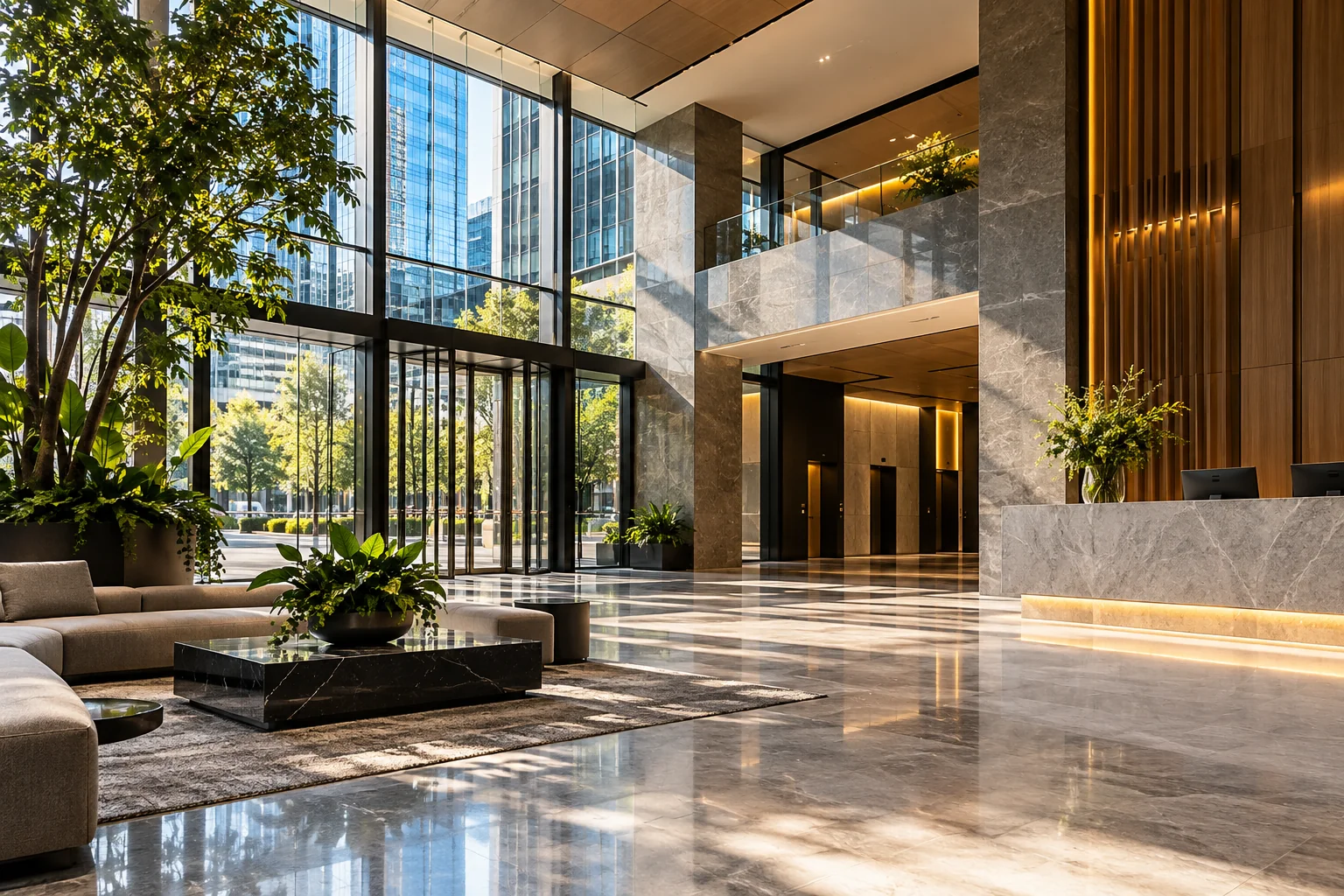
Walk into a well-operated Class A building and the experience feels effortless.
The lobby is presentation-ready. Restrooms are maintained throughout the day. High-traffic areas remain orderly. Tenant-facing spaces reflect the quality of the property. Issues are addressed before they become recurring complaints.
What occupants rarely see is the operational discipline required to keep a premium commercial property performing at that level.
For property managers and facility teams, cleaning is not simply a matter of appearance. It is part of the daily operation of the building—and in a Class A environment, expectations are considerably higher.
The right facility services partner should understand that distinction.
A Class A Property Requires More Than a Standard Cleaning Program
Premium commercial properties operate differently from smaller or lower-traffic facilities.
They may accommodate hundreds or thousands of occupants, visitors, vendors and employees throughout the week. Lobbies experience continuous foot traffic. Restrooms can require attention throughout the business day. Elevators, common areas, amenity spaces and entrances can change rapidly as occupancy fluctuates.
At the same time, tenants expect consistency.
A building can be serviced overnight and still experience operational issues by 11:00 a.m.
That is why an effective program should be designed around how the property actually operates, rather than simply around a checklist of cleaning tasks.
The question is not only:
“Was the building cleaned?”
A better question is:
“Is the building ready for the people using it?”
That difference is fundamental to how CleanShift approaches high-performance environments.
Tenant Experience Begins Before Anyone Reaches the Office
For many tenants and visitors, their experience with a property begins long before they enter a tenant suite.
It starts at the entrance.
The condition of the lobby, glass, elevators, restrooms, common areas and other shared spaces contributes to the perception of the entire property.
A beautifully designed building can lose some of that impact when these areas are inconsistently maintained.
For property management teams, this makes facility presentation part of tenant experience.
The objective should not be perfection for a few minutes immediately after the overnight crew leaves. The objective is maintaining an appropriate standard throughout the building's operating day.
That requires consistency, communication and an understanding of traffic patterns.
Day Porters Can Become an Extension of Building Operations
In many high-traffic commercial properties, overnight cleaning alone may not be enough.
This is where day porter services become particularly valuable.
A well-managed porter program can help address conditions as they develop: maintaining restrooms and common areas, monitoring supplies, responding to spills or unexpected issues, supporting lobby presentation and communicating conditions that require additional attention.
The best porter programs should not feel intrusive.
They should feel almost invisible.
Problems are identified. Conditions are corrected. Property management is informed when necessary. The building continues operating.
That is a very different mindset from waiting until the next scheduled cleaning shift.
Restrooms Are One of the Most Visible Measures of Facility Performance
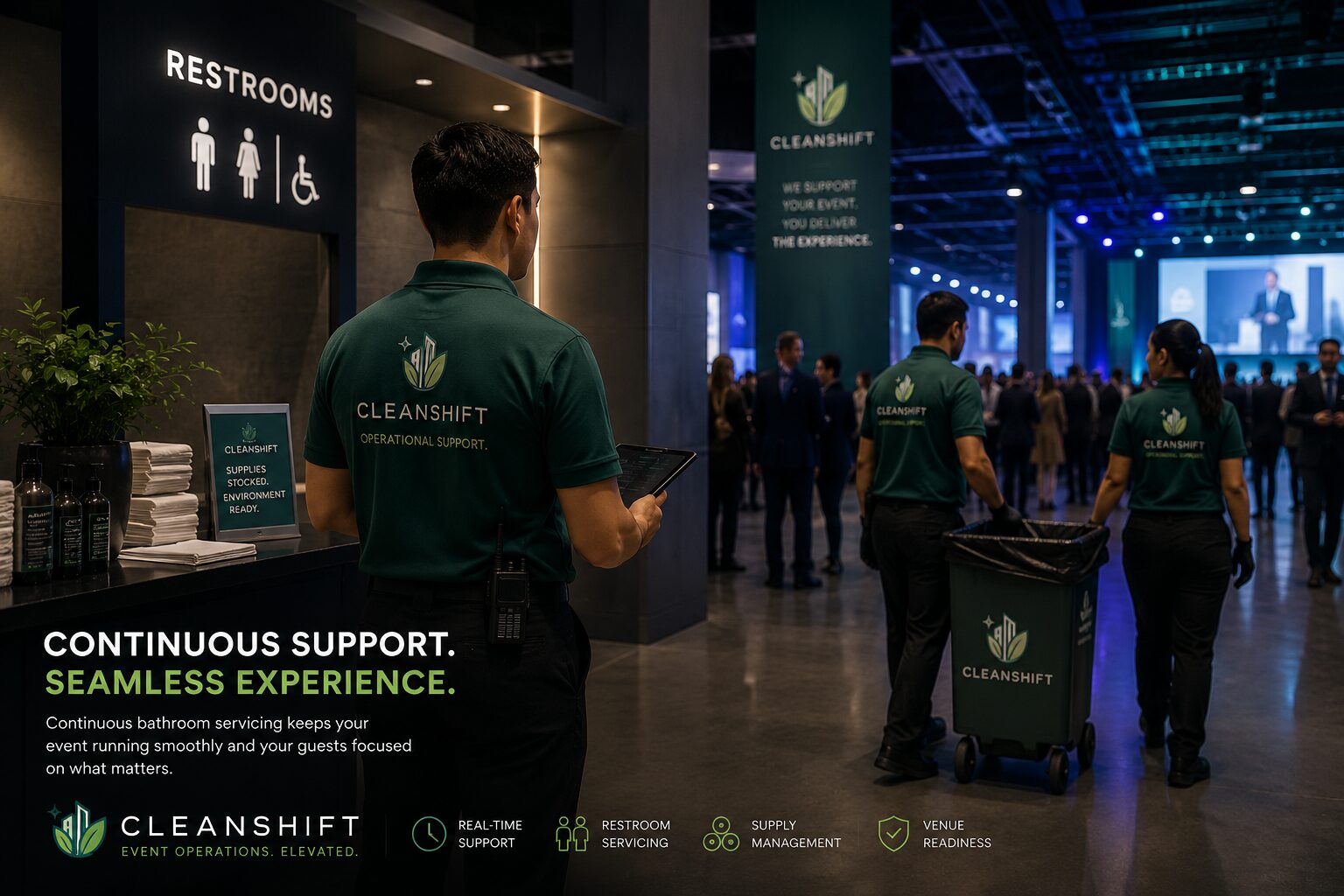
Restrooms are among the most frequently used shared spaces in a commercial property—and often one of the first places occupants notice inconsistencies.
Maintaining them requires more than a single cleaning.
High-occupancy buildings may require recurring inspection and servicing throughout the day based on traffic patterns and tenant schedules.
Supplies must remain available. High-touch surfaces require appropriate attention. Floors and fixtures need to remain presentable. Problems should be identified quickly rather than waiting for an occupant to report them.
The exact servicing frequency should be based on the property itself.
A building with significant visitor traffic, large tenant populations or heavily used amenity areas may require a very different operating plan from a smaller professional office.
The service model should follow the building—not the other way around.
Consistency Is More Valuable Than Occasional Perfection
One of the most important characteristics of a strong facility services program is predictability.
Property managers should not have to repeatedly identify the same deficiencies.
They should know what standard to expect.
That requires clear scopes of work, appropriate staffing, reliable scheduling, quality-control procedures and accountability when something does not meet expectations.
It also requires communication between field personnel and management.
A recurring problem should not simply be cleaned repeatedly. When appropriate, it should be documented and communicated so the property team can understand what is happening.
That turns facility service from a series of disconnected tasks into a more useful operational function.
Documentation Creates Accountability
Modern property management increasingly depends on visibility.
Facility services should be no different.
Depending on the property's requirements, useful reporting can include service confirmation, inspection records, photographs, condition reporting, supply observations and documentation of unusual issues encountered during service.
The purpose is not to create paperwork for the sake of paperwork.
It is to create accountability.
When a property manager oversees a large building—or an entire portfolio—they cannot personally inspect every space after every service.
A reliable reporting structure provides another layer of operational visibility.
At CleanShift, we believe technology should support the people performing the work rather than replace them.
That philosophy is reflected in a simple idea:
AI Powered. People Driven. Always.
Communication Matters When Conditions Change
Commercial buildings are dynamic environments.
A tenant may host an event. A conference may increase visitor traffic. Construction may affect a common area. Weather may create additional entrance maintenance. A plumbing issue may suddenly require attention. Building occupancy can fluctuate significantly from one day to another.
A rigid cleaning schedule cannot anticipate every condition.
A strong facility partner needs the ability to communicate, adapt and respond.
That means property management should have a clear escalation path when something happens—and field teams should understand when an issue needs to be brought to management's attention.
Responsiveness becomes especially important in premium properties because relatively small issues can quickly become highly visible.
The Lowest Bid Is Not Always the Lowest Cost
Commercial facility contracts are understandably budget-sensitive.
But price alone does not determine the actual cost of a service program.
Understaffing, inconsistent attendance, inadequate supervision, repeated deficiencies and poor communication can consume property-management time while creating frustration for tenants.
A cheaper contract that requires constant intervention may not actually be inexpensive.
Property managers should evaluate whether a provider has the operational structure necessary to consistently execute the scope.
That includes questions such as:
- How will the property be staffed?
- How is service quality verified?
- Who responds when an issue occurs?
- How are recurring deficiencies handled?
- How does the provider communicate with property management?
- Can the service model adapt as occupancy or building requirements change?
Those questions often reveal more about a potential facility partner than the bottom line of a proposal.
Premium Buildings Need Property-Specific Service Plans
There is no universal cleaning schedule for every Class A building.
A downtown high-rise may operate very differently from a suburban corporate campus. A building with restaurants and ground-floor retail may have different traffic patterns from a professional-services property. A property with fitness facilities, conference centers or extensive amenity areas introduces additional operational considerations.
The service plan should account for factors such as building occupancy, operating hours, tenant expectations, traffic patterns, restroom usage, common areas, amenities, events and property-management requirements.
That may involve a combination of overnight service, daytime porter coverage, periodic services and responsive support.
The objective is to create a program that fits the property rather than forcing the property into a predetermined service model.
Facility Teams Should Protect the Standard of the Asset
Class A properties represent significant investments.
Architecture, amenities, technology and location may help attract tenants, but maintaining the day-to-day environment is part of protecting the property's positioning.
Facility services contribute to that effort.
They help preserve the presentation of shared environments, support tenant experience and provide property teams with another operational resource inside the building.
For this reason, selecting a facility services provider should not be treated as simply purchasing labor hours.
It is selecting a team that will repeatedly operate inside the asset and contribute to the experience people associate with it.
The CleanShift Approach
CleanShift supports high-performance environments where consistency, presentation and operational readiness matter.
Our approach combines trained field personnel, defined scopes of work, operational communication and technology-supported reporting to help clients maintain visibility into the services being performed.
Depending on the needs of the property, support can include recurring commercial cleaning, day porter services, restroom servicing, high-touch-area maintenance, common-area support, facility readiness, event-related building support and scheduled specialty services.
We believe the strongest facility relationships are built around something straightforward:
Do what was agreed upon. Document the work. Communicate when conditions change. Respond when the property needs support.
That standard becomes increasingly important as buildings become larger, busier and more complex.
Building Operations Should Feel Seamless
When facility operations are working correctly, most occupants never think about them.
They simply experience a building that feels ready.
That is the goal.
For property managers, asset managers and facility teams responsible for premium commercial environments, the right service partner should reduce operational friction—not create more of it.
CleanShift works with organizations responsible for high-traffic and specialized environments throughout the San Francisco Bay Area, with expanding capabilities in additional markets.
If your team is evaluating facility services for a Class A office building, corporate property or premium commercial environment, connect with CleanShift to discuss the property, operating schedule and service requirements.
© 2026 CleanShift. All rights reserved.